
How to care for quartz, granite, marble, and quartzite
Stone countertop care works best when daily habits match the material, the finish, and the way the surface is used. A national time-use survey reports that food preparation and cleanup take 0.71 hours per day on average, or about 43 minutes. That level of daily contact makes small care habits more important than occasional deep cleaning.
Quartz, granite, marble, and quartzite do not need the same routine. Some surfaces handle stains well but dislike heat. Some resist scratches but still need sealing. Others look beautiful because they are softer and more reactive. Good maintenance protects the finish you chose, the fabrication work underneath it, and the way the room feels after installation.
How should you care for stone countertops daily?
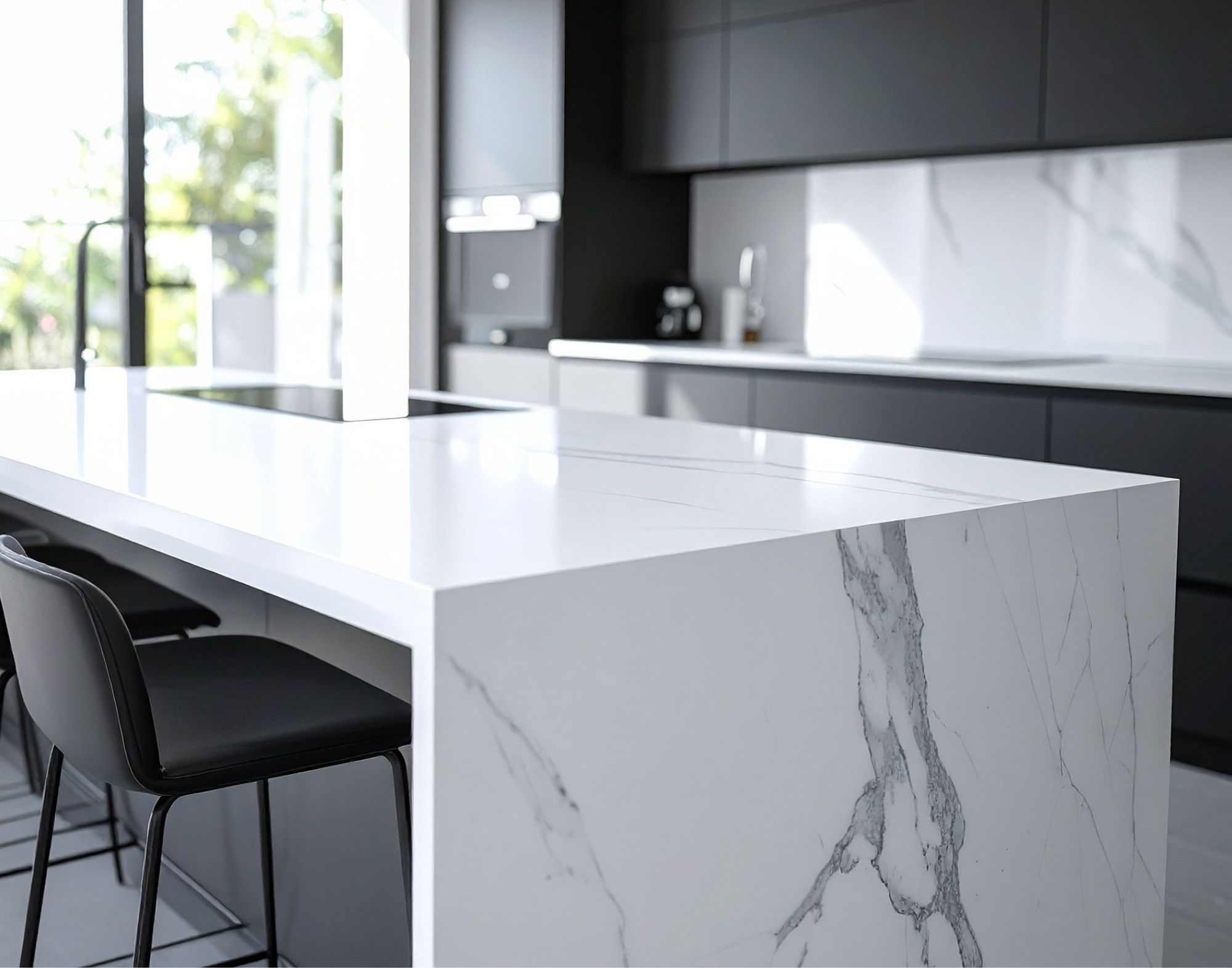
Clean stone countertops with a soft cloth, warm water, and a gentle cleaner made for the surface. Wipe spills promptly, dry the area after cleaning, and use boards, trivets, and coasters during food prep. Daily care should reduce exposure to stains, heat, moisture, and grit.
A busy kitchen shows why routine matters. Coffee near the machine, oil beside the cooktop, and water around the sink all touch the countertop every day. A quick wipe after breakfast will protect the surface better than a heavy cleaning session at the end of the week, especially near seams, sink cutouts, and high-use corners.
The safest habit is simple and repeatable. Keep one soft cloth near the sink and one stone-safe cleaner nearby. Avoid leaving wet cloths, produce bags, metal cans, or coloured packaging sitting on the surface. These small choices help the countertop keep its polish and make larger maintenance tasks easier to manage.
Stone care starts with matching habits to material
Stone countertop care starts with knowing what your surface is made from. Quartz, granite, marble, and quartzite react differently to moisture, heat, acid, and abrasion. A maintenance routine will work best when it reflects the material’s structure rather than treating every stone surface the same way.
A white marble vanity beside a sink needs faster drying than a sealed granite kitchen island. A quartz countertop near a cooktop needs more heat protection than many homeowners expect.
| Surface situation | Care choice that protects the finish |
|---|---|
| A kitchen island used for meal prep | Use cutting boards to keep grit and knife marks away from the surface. |
| A vanity with daily water exposure | Dry around faucets so minerals and soap residue do not build up. |
| A cooktop beside engineered quartz | Use trivets because direct heat can stress the resin in the slab. |
| A light natural stone with heavy veining | Clean spills quickly so pigments and acids have less contact time. |
| A newly installed custom surface | Ask for the exact material name and care instructions before daily use begins. |
Quartz needs gentle cleaning plus heat protection
Quartz countertop maintenance is usually straightforward because the surface is engineered to resist many household stains. It still needs gentle cleaning, protection from direct heat, and care around edges. Strong chemicals, abrasive pads, and hot cookware can damage the finish or affect the resin content.
A quartz countertop near a coffee station will usually wipe clean after sugar, cream, or light spills. The bigger risk comes from habits that feel harmless, such as placing a hot pan on the surface while clearing the stove. A trivet should be part of the cooking routine, even when the countertop feels solid and polished.
Gentle care also protects the visual finish. Use non-abrasive cleaners and soft cloths, especially on darker colours or honed-style finishes that show residue more easily. ABC Stone explains care instructions during the material and installation process so clients understand how daily habits affect the surface after the project is complete.
Granite stays easier to maintain when sealed properly
Granite countertop care depends on proper sealing, regular cleaning, and quick attention to oil-based spills. Granite is durable, but many slabs are porous enough to benefit from a sealer. A sealed surface gives you more time to clean spills before staining becomes a concern.
Cooking oil near the stove is a common test. If oil sits on unsealed or worn granite, it can leave a darker mark that is difficult to remove. Water around the sink can also reveal weak sealing when droplets soak in quickly instead of resting on the surface. These signs mean the countertop needs attention.
A simple water-drop check helps you decide when to reseal. Place a few drops on a clean area and watch how the stone reacts. Water that darkens the stone quickly signals reduced protection. Sealing gives granite a stronger defence against daily kitchen use, while routine cleaning still matters.
Marble maintenance requires faster spill response

Marble countertop maintenance requires quick cleanup because marble is softer and more reactive than many other stone options. Acidic foods, harsh cleaners, and abrasive scrubbing can etch the surface. Etching is a dull mark on the finish, which differs from a stain that discolours the stone.
The Mohs scale ranks calcite at 3 and quartz at 7, which explains why marble reacts differently to abrasion and acidic contact than quartz-rich stone]. Lemon juice, tomato sauce, wine, and vinegar can affect marble quickly. A polished marble island used for entertaining needs coasters, trays, and fast wiping when food or drinks spill.
Marble rewards homeowners who accept its character and care needs. It can develop a soft patina over time, especially in kitchens. People who want a perfect high-gloss surface with low effort will usually feel more comfortable with another material. People who love natural variation can enjoy marble when they treat cleanup as part of daily use.
Quartzite care depends on accurate material identification
Quartzite care starts with confirming that the surface is true quartzite. Some stones sold with quartzite-like names behave closer to marble or dolomitic marble. Accurate identification matters because the wrong care routine can lead to staining, etching, or unrealistic expectations after installation.
A slab that looks like marble with grey veining can still be quartzite, but appearance alone is not enough. Ask what the material is, how porous it is, and how it reacts to acid. A reliable fabricator will explain sealant needs and help set realistic expectations before the surface is cut and installed.
Quartzite is often chosen by homeowners who want natural movement with stronger daily performance than marble. Care still matters. Use a stone-safe cleaner, wipe spills promptly, and check sealing on areas near sinks or coffee bars. Treat it as premium natural stone, because that mindset protects both the surface and the investment.
Common cleaning mistakes can permanently dull stone surfaces
Most stone damage comes from repeated small mistakes rather than one dramatic accident. Acidic cleaners, harsh powders, abrasive pads, standing water, and direct heat can all affect the finish. The safest approach is to choose mild products and remove anything that sits on the surface longer than necessary.
Common issues often start during normal cleanup after cooking. A rough sponge used on dried sauce can leave faint dullness. A vinegar spray used because it feels natural can harm marble. A hot tray placed on quartz for a few seconds can leave stress marks. These habits are easy to correct once you know the risk.
Use pH-neutral cleaners made for stone surfaces.
Keep vinegar and lemon-based sprays away from natural stone.
Place hot cookware on trivets instead of bare countertops.
Dry sink areas after heavy water use.
Test any new cleaner on a hidden area first.
Fabrication guidance should shape your long-term care plan
Long-term stone care works best when maintenance guidance starts before installation is complete. The material name, finish, edge profile, seam layout, sink style, and use area all affect care. A good plan gives you clear instructions for the exact surface in your home.
A waterfall island, a bathroom vanity, and a fireplace surround will not age the same way. The island faces food prep and heat. The vanity faces water and cosmetics. The fireplace surround faces dust, touch points, and temperature shifts around the feature. Care should reflect those use patterns instead of relying on one generic cleaning routine.
ABC Stone’s role as a fabricator and installer gives that guidance practical weight. The same details that shape measurement, cutting, polishing, and installation also shape maintenance after the surface is in place. A well-cared-for countertop is the result of disciplined material selection, precise fabrication, and steady daily habits that protect the finish for years.